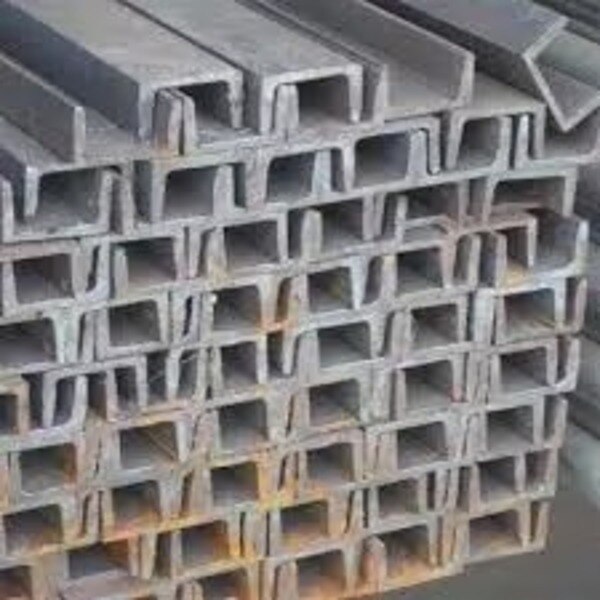
The right channel depends on span, support condition, load position, orientation and restraint—not on nominal depth alone. By the end, you will have a practical preliminary selection method, know which details to request from a supplier, and understand when an engineer must verify the choice.
Key takeaways
- Record load, clear span, bearing length and support condition before choosing a channel.
- Compare depth, flange width, thickness, weight per metre and section properties.
- Check bending strength, deflection, lateral stability and connection details.
- Request quotations showing grade, size, length, weight, cutting and delivery terms.
Start with the load, span and support condition
A channel’s nominal depth is not the starting point; collect the design action, span and support condition first. For MS channel size selection in Madurai, record the clear span, support spacing, bearing length, whether the ends are simply supported, fixed or continuous, and how the channel is connected.
A supplier cannot determine safe capacity from span and section size alone.
Record these MS channel load requirements before requesting a size:
- Dead load: channel self-weight, connection plates, flooring, cladding, services and attached equipment.
- Imposed load: people, stored materials, machinery or vehicle wheels, including each point-load position.
- Environmental load: wind under IS 875 and seismic effects under IS 1893 where applicable.
- Load duration and impact: distinguish a steady distributed load from a hoist, crane, trolley, machine start-up or dropped-load effect.
- Orientation and restraint: state which flange is in compression, whether the channel is paired, and whether a slab, purlin, cleat or bracket restrains it laterally.
- Connection detail: give bolt or weld locations, bearing plates and any holes that reduce the web or flange.
| Load arrangement | Information to collect | Why it changes selection |
|---|---|---|
| Uniform load | Load per metre and full loaded length | Governs bending and deflection across the span |
| Concentrated load | Magnitude, position and contact plate size | Can cause local web failure and higher bending |
| Support reaction | Reaction value, bearing width and support type | Controls web crippling, shear and connection design |
Give the designer the required serviceability limit, such as span/240 or span/360, rather than asking for a generic “heavy-duty” channel.
Read the channel designation and compare the steel section properly
“ISMC 150” identifies a standard channel family and nominal 150 mm depth; it does not, by itself, state the steel grade, exact thickness or load capacity. The 150 refers to the approximate overall web depth, while the section table gives flange width, web thickness, flange thickness, mass per metre and section properties.
| Quotation wording | What it tells you | What remains to verify |
|---|---|---|
| ISMC 150 | Medium-weight Indian Standard channel with nominal 150 mm depth | Exact dimensions, mass and section properties |
| ISLC 150 | Light channel with a different geometry | Do not treat it as equivalent to ISMC 150 |
| 150 channel | Only a nominal depth | Section family, thickness, grade and standard |
Compare the complete designation, not just the depth. Common ISMC nominal depths include 75, 100, 125, 150, 175, 200, 250, 300 and 400 mm, but stock in Madurai depends on the mill and service centre.
Check the dimensions and properties against IS 808:2021. Then specify the steel separately: IS 2062 E250 or E350 states material strength and quality requirements, while IS 808 covers rolled-section dimensions and properties. Ask for theoretical mass per metre, dimensional tolerance, heat number and test certificate requirement.
For MS channel sizes in Madurai, compare quotations using the same designation, grade, ordered length, piece count and mass basis. A lower price per piece can conceal shorter lengths or a lighter section with the same nominal depth.
Match the channel to bending, deflection and stability demands
The channel size you need is set by bending, deflection and stability, not by nominal depth or kilograms per metre alone. Keep the web vertical for the usual strong-axis beam action; rotate the channel and its bending stiffness changes sharply, while an open side facing sideways makes twisting and lateral movement more likely.
Lateral restraint can increase usable capacity, but only when it is real and adequately connected. A slab that continuously restrains the compression flange behaves differently from widely spaced purlins, cleats or brackets. Without restraint, check lateral-torsional buckling under IS 800:2007 rather than treating the channel as a laterally supported beam.
A uniformly distributed floor load is not equivalent to a wheel, machine foot, hoist, crane reaction or beam reaction. A point load can create local web bending, flange bending and much higher deflection near its application point. Include impact where equipment starts, stops or moves.
Use this checklist before selecting an MS channel for construction:
- State whether the channel is simply supported, continuous or fixed, and identify the actual load position.
- Specify web orientation, compression-flange restraint and restraint spacing.
- Separate dead, imposed, wind, seismic and crane loads; include the channel, plates, flooring, cladding, services and equipment in dead load.
- Give the allowable service deflection, such as span/240 or span/360, based on finishes, machinery or trolley operation—not habit.
- Treat two channels as a built-up member only after designing spacing, lacing or battens, bolts or welds, load sharing, slip, torsion and local buckling.
- State steel grade and standard, such as IS 2062 E250 or E350 and IS 808, because MS channel load requirements cannot be determined from span and size alone.
Use a preliminary calculation, then get the section verified
A defensible preliminary choice starts with the design action, not the channel’s nominal depth or mass per metre. For MS channel size selection in Madurai, reduce the real arrangement to a beam model and use consistent units for span, load, steel strength and section properties.
1. Calculate dead load from flooring, cladding, services, connection plates, attached equipment and the channel’s own mass. Add imposed, wind, seismic, crane or impact loads as separate cases; IS 875 covers many imposed and environmental loads, while IS 1893 applies where seismic design governs.
2. For a simply supported channel under a uniformly distributed load, estimate maximum bending moment as M = wL²/8. For a central point load, use M = PL/4. A machine reaction, wheel or hoist load can therefore demand a larger section than the same total load spread across the span.
3. Check serviceability as well as strength. A preliminary deflection estimate uses 5wL⁴/384EI for uniform load or PL³/48EI for a central point load; the designer must set the permitted limit, such as span/240 or span/360, from the finishes, machinery or trolley operation.
4. Compare the calculated demand with an IS 808 section table, considering channel orientation, lateral restraint, web and flange thickness, grade such as IS 2062 E250 or E350, and connection detailing. A nominally deeper section is not automatically adequate.
Treat the result as a shortlist, not an approval. Have a structural designer verify bending, shear, lateral-torsional buckling, bearing, connections and load combinations before ordering MS channel for construction.
Make the Madurai quotation comparable and fit for the job
A low price per piece proves nothing if the supplier has quoted a shorter length, lighter mass, or a different section. Ask an MS channel supplier in Madurai for a written schedule, not a line reading only “MS channel.”
- IS 808 designation, such as ISMC 150, plus web depth, flange width, thickness and theoretical mass per metre
- Steel grade, such as IS 2062 E250 or E350, and the applicable product standard
- Heat number and mill test certificate requirement, if the channel forms part of a structural frame
- Ordered length, number of pieces, stock length, permitted mill tolerance and any cut-length tolerance
- Cutting plan, saw-cut charges, cutting loss, loading, transport to your Madurai delivery location and applicable taxes
- Required section properties or design reaction from your engineer; for secondary supports, state span, load, restraint and whether the channel is single or built-up
- Surface condition and rejection criteria for pitted flanges, reduced bearing thickness, heavy bends and badly damaged ends
- Availability confirmation before design approval, especially for uncommon MS channel sizes in Madurai; ask for the mill designation, section table and actual quantity in stock
Sun Steel Traders can be asked to quote the same schedule, allowing you to compare its listed sections against another offer without confusing nominal depth with capacity. Do not approve a back-to-back pair until its spacing, lacing or battens, connections and load sharing have been designed.
Related products
 | Solutions Offered Find Application In Meeting The Construction Demands Of Industrial Sheds, Bridges, Building Structure And In Other End Application... View product → |
 | I Channel Dealers In Avaniyapuram Madurai I Channel View product → |
Frequently asked questions
What information do I need before choosing an MS channel size?
Record the design load, clear span, support spacing, bearing length, support condition and connection method. Note whether the channel is simply supported, fixed or continuous.
How do I compare MS channel sizes correctly?
Compare the actual depth, flange width, web and flange thickness, weight per metre, steel grade and section properties. Do not compare depth alone.
What checks determine whether an MS channel is suitable?
Check bending strength, shear, deflection, lateral stability, bearing and the channel-to-support connection. The required checks depend on the load arrangement and support condition.
How can I compare MS channel quotations in Madurai?
Ask each MS channel supplier in Madurai to state the section designation, steel grade, length, quantity, weight basis, cutting charges, taxes, delivery terms and documentation.
Related products
 | Ms Angle and Channel Dealers In Alangaanallur More Details www.sunsteeltraders.in View product → |
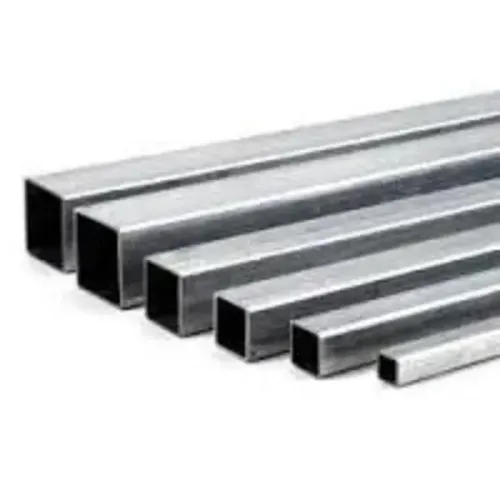
 | Ms Square Pipes Dealers In Madurai These MS Square Steel Pipes That We Offer Are Made From High Grade Mild Steel Materials That Are Highly Break Resistant. View product → |
 | MS Polished Flat Dealers In Thirupparankundram Madurai Ms Polished Flat In General Engineering And Fabrication Jobs, These Bright Flat Bars Find Suitability In Work Areas Like Component Manufacturing,... View product → |
 | I Beams Dealers In Thirumangalam Madurai I-Beams Are Commonly Made Of Structural Steel But May Also Be Formed From Aluminium Or Other Materials. View product → |
Keywords